Honoring the Fallen: Symbols and Traditions of Military Remembrance

Memorial Day is a time to remember the men and women who died while serving in the U.S. Armed Forces. It is a day rooted in remembrance — recognizing the cost of freedom and the service members, families, and communities forever changed by that sacrifice.
Across generations, Americans have found ways to express both gratitude and remembrance. From solemn ceremonies to small, personal objects kept by families, the traditions and symbols associated with military remembrance carry layers of meaning. These items and rituals remind us that remembrance isn’t just about one day and doesn’t end at the cemetery gate.
Wounded Warrior Project® (WWP) honors military service every day by providing life-changing programs and services for active-duty service members, veterans, and their families. That way, their sacrifices are met not only with ceremony but with continued care.
Here’s a look at some symbols and traditions that remind us freedom isn’t free and we must never forget those who made the ultimate sacrifice.
Find out the Facts, Meaning, and History of Memorial Day
Tomb of the Unknown Soldier
At Arlington National Cemetery stands the Tomb of the Unknown Soldier, perhaps the most iconic military memorial. The first “unknown soldier” at Arlington’s famed tomb was a World War I service member whose remains could not be identified. This soldier represented all those lost to war whose names are unknown or whose bodies were never recovered.

DVIDS photo
In 1921, Congressman and WWI veteran Hamilton Fish, Jr. proposed legislation for the internment of an unknown American soldier at a special tomb in Arlington National Cemetery. Fish said the purpose was “to bring home the body of an unknown American warrior who in himself represents no section, creed, or race in the late war and who typifies, moreover, the soul of America and the supreme sacrifice of her heroic dead.”
Today, the Tomb remains a place of national mourning and reflection. It is guarded by soldiers from the 3rd U.S. Infantry Regiment (“The Old Guard”), whose measured steps and changing-of-the-guard ceremony underscore a simple message: The nation keeps watch, even when a fallen service member’s name has been lost to history.
Other interesting facts:
- The first Unknown was interred on Nov. 11, 1921. Unknowns from World War II and the Korean War were later added in 1958.
- In 1998, the remains once interred as the “Vietnam Unknown” were identified using modern forensic methods and returned to the service member’s family. After, the crypt was intentionally left empty and today stands as a symbol of America’s missing service members from that war.
- Tomb Sentinels have maintained a 24-hour-a-day watch since 1937, making it one of the most continuous ceremonial guards in the nation.
The “Missing Man” Table

Also known as the Fallen Comrade Table, the Missing Man Table honors fallen or missing service members by symbolizing that their spirits remain with us. It’s a place setting for someone who should be present but isn’t.
The setting for a Missing Man Table includes:
- A white tablecloth symbolizing purity of motives.
- A single red rose in a vase to remind us of the lost lives and the loved ones who keep the faith.
- A red or yellow ribbon, which symbolizes a commitment to account for the missing.
- A slice of lemon to represent the bitter fate the missing service member met.
- A pinch of salt, symbolizing the tears shed for the missing service member.
- A lit candle to reflect hope for a return.
- An inverted glass symbolizing the missing service member’s inability to engage in a toast.
- The empty chair represents the seat that remains unclaimed by the felt absence.
- Oftentimes, a Bible is included to represent a service member’s faith.
- Missing Man tables are often set up in military dining facilities.
- The table used should be round to signify the never-ending burden of fallen and missing service members.
The Folded Flag

DVIDS photo
The caskets of deceased service members and veterans are often draped with a flag, which is folded in a specific manner and presented to the service member’s or veteran’s loved ones. The folded flag serves as a lasting tribute to the service member’s legacy and sacrifice. Each fold of the flag, 13 in total, carries a significant meaning.
Other interesting facts:
- The flag is folded into a tight triangle with only the blue field of stars visible, echoing the tricorn hats worn by some Revolutionary War soldiers.
- At many military funerals, the folded flag is presented to the next of kin during a brief presentation, often accompanied by “Taps.”
- Families often choose to display the folded flag in a triangular case as a permanent keepsake.
Dog Tags

DVIDS photo
While every service member is issued dog tags, they take on greater significance when a service member dies.
Typically worn in pairs, the tags help identify a service member if they are injured or killed — and they can become deeply personal objects for the unit and the family. In some memorial settings, dog tags may be displayed on a cross, marker, or other memorial item to represent someone who cannot be present.
Other interesting facts:
- Several theories explain the origin of the nickname “dog tags,” including draftees claiming to be treated like dogs and because the tags resembled the license tags worn by dogs.
- U.S. Marine Corps identification tags include a line for a service member’s gas mask size, reflecting the Corps’ emphasis on readiness for hazardous environments.
- For many years, some branches used Social Security numbers on tags; today, an ID number is typically used instead to reduce the risk of identity theft if a tag is lost.
The Battlefield Cross

DVIDS photo
Often seen at memorial services and battlefield remembrance ceremonies, the Battlefield Cross is a simple, powerful symbol made from a fallen service member’s boots, rifle, and helmet. The boots are placed at the base, the rifle is positioned upright with the barrel down, and the helmet rests on the rifle’s stock.
This arrangement stands in for the person who is absent — marking a place for grief, respect, and unit remembrance. While the exact components can vary by service and setting, the symbol is widely recognized across the U.S. military as a tribute to sacrifice and camaraderie.
Other interesting facts:
- The first Battlefield Cross may date back to the Civil War, where wooden plaques marked the spot where a soldier died before he was removed for burial.
- During the Korean War, the Battlefield Cross took on a more sentimental meaning rather than a grave marker, to help fellow service members find closure.
- A rifle with a bayonet stuck in the ground suggests the service member “went down fighting.”
Gold Star Families
A family is considered a Gold Star family when they have lost a loved one who died while serving in the U.S. military. The term comes from the tradition of displaying a service flag during wartime; a blue star represented a family member in service, and a gold star represented a service member who died in service.
Other interesting facts:
- Gold Star families are honored year-round, and many communities hold special recognition events around Memorial Day.
- The Gold Star Lapel Button is a U.S. award presented to eligible next of kin of service members who died in combat or in certain service-related circumstances.
- The phrase “Gold Star” is also used by support organizations that connect surviving families with resources and one another.
Red Poppies

The symbolism of red poppies to honor service members and veterans dates back to World War I.
The red poppy became associated with remembrance after the poem “In Flanders Fields,” written by Major John McCrae. The poem describes poppies growing among soldiers’ graves.
Over time, the red poppy became a widely recognized symbol of honoring the fallen and supporting those who served. It’s often worn as a small pin or displayed in memorial arrangements around late May.
Other interesting facts:
- National Poppy Day is celebrated on the Friday before Memorial Day.
- Red poppies are also symbols to honor the fallen in countries other than the U.S.
- In the U.S., poppy distributions and donations are often tied to veteran-support programs that fund assistance for veterans and their families.
3-Volley Salute

DVIDS photo
You’ve probably heard of the 21-gun salute, but that honor is reserved for presidents, heads of state, and other high-level ceremonial occasions, and it's fired by cannons or artillery. The 3-volley salute is more common at military funerals, where a small firing party discharges three rifle volleys to honor the fallen.
Other interesting facts:
- The three volleys or cartridges from the rifle are sometimes placed in the folded flag and informally said to signify “duty, honor, and sacrifice.”
- Honor guards generally conduct the 3-volley salute.
- Gun salutes for the military are always in odd numbers.
Veteran Cemeteries Abroad

DVIDS photo
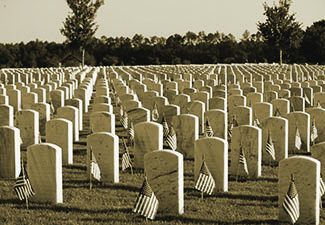
Veterans cemeteries are designed as places of honor and reflection. They are also carefully maintained to ensure the graves are preserved for generations.
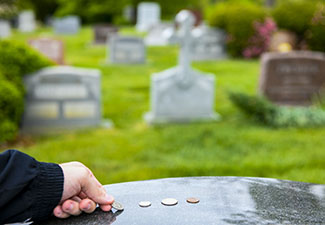
Many Americans are surprised to learn that U.S. service members are also buried abroad in dedicated cemeteries that commemorate major conflicts. Visitors sometimes leave small tokens, such as coins on headstones, as quiet signs of respect and remembrance.
American military cemeteries and markers exist in multiple countries outside the U.S., including in France, Italy, the United Kingdom, Belgium, and the Philippines.
Other interesting facts:
- The American Battle Monuments Commission (ABMC) maintains 26 permanent American military cemeteries, 31 federal memorials, monuments, and markers in 17 foreign countries.
- More than 200,000 fallen service members are buried or memorialized at ABMC sites.
- Most U.S. memorial sites abroad are related to World War I and World War II.
Warriors’ Thoughts on Memorial Day
To many veterans, Memorial Day is less about a long weekend and more about names, faces, and moments that never leave them.
Find out how WWP honors and serves warriors for a lifetime.
*The appearance of U.S. Department of War (DoW) visual information does not imply or constitute DoW endorsement.
Contact: Paris Moulden, Public Relations, pmoulden@woundedwarriorproject.org, 904.570.7910
About Wounded Warrior Project
Wounded Warrior Project® (WWP) is the nation's leading veterans service organization, focused on the total well-being of post-9/11 veterans, active-duty service members, and their families. Our programs, advocacy, and awareness efforts help warriors thrive, provide essential lifelines to families and caregivers, and prevent veteran suicides. Learn more about Wounded Warrior Project.
Some recognize Memorial Day by the seemingly endless commercials for car sales. Some recognize it as a long weekend to gather with friends and family around the barbeque. But what is the meaning...
Memorial Day is a time to honor those who made the ultimate sacrifice for our freedom. During this time, ceremonies honoring those brave men and women who gave their lives for our freedoms are...

Military medals and ribbons are more than decorations. They are symbols of service, honor, commitment, and bravery. You can’t earn them without great sacrifice. But have you ever wondered what...

While any time is a good time to thank military members for their service, some military-related holidays and observances are an especially great time to recognize those who took the oath to serve...